


Executive summary: 250 years and the City of Jefferson
Vol. 82, No. 3 / May-June 2026
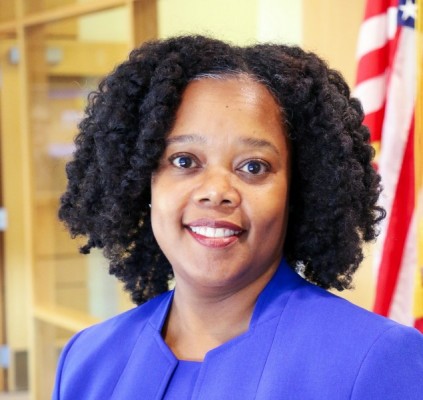
Mischa Buford Epps is executive director of The Missouri Bar.
Most days, you will find me at The Missouri Bar Center in Jefferson City. In the rhythm of daily work, it is easy to move through a city without pausing to consider whose name it carries. But, as July 4, 2026, approaches, marking 250 years since the signing of the Declaration of Independence, I’ve found myself thinking more deliberately about Thomas Jefferson, for whom this city is named.
Jefferson was 33 years old, a Virginia lawyer, when he took up his pen and drafted one of the most consequential pieces of political writing in history. The Declaration of Independence did not emerge from a military commander or a monarch. It came from a lawyer. It required a legal argument. And the argument he made, that all men are created equal and endowed with unalienable rights to life, liberty, and the pursuit of happiness, has been echoing through courtrooms, legislatures, and the conscience of our nation ever since.
 The legal profession’s fingerprints are all over the American founding. Of the declaration’s 56 signers, roughly 25 were lawyers or had legal training. John Adams, the declaration’s most tireless advocate in the Second Continental Congress, built his reputation in courtrooms before he built it in crafting the new republic. James Wilson, one of only six men to sign both the declaration and the U.S. Constitution, was among the most sophisticated legal theorists of his generation. The founding generation from the bar understood that lasting liberty required not just revolution, but architecture: institutions, processes, and enforceable rules that would outlive any individual leader. They understood, in short, the rule of law.
That principle — that no person stands above the law, that rights are not gifts from rulers but inherent in persons, that law should be consistently and fairly applied — is the connective tissue of everything that 250 years and the City of Jefferson followed. It is why we have an independent judiciary. It is why we have due process. It is why our U.S. Constitution, even with its imperfections, has endured.
For those of us who have devoted our professional lives to the law, the rule of law is not an abstraction. It is the ground beneath everything we do.
And yet Jefferson himself embodies one of the most searing paradoxes in American history. The man who wrote that all men are created equal enslaved hundreds of people over the course of his lifetime. The soaring ideals in the declaration coexisted with a lived reality he was never willing to fully surrender.
Jefferson was not alone in this contradiction. The Constitution that followed protected slavery, counting enslaved persons as three-fifths of a human being for purposes of political representation. It said nothing of women’s rights. Indigenous people, whose nations and legal systems predated the arrival of colonists by centuries, were treated as obstacles rather than as rights-bearing persons.
The founding vision was radical for its time but also grievously incomplete.
This is not a reason to diminish the declaration’s 250th anniversary, but to understand it fully. The story of American law is the story of that original promise being slowly and imperfectly extended through constitutional amendments, civil rights legislation, landmark court decisions, and the lifelong labor of advocates who believed the words meant what they said. 
We stand on the shoulders of lawyers who pushed our country toward its own ideals, understanding that the law is the arena where the distance between a nation’s promises and its practices gets contested and, sometimes, closed. That arena best functions when judges presiding over it are free to follow the law without being subject to undue political pressures, usurpation of authority, and diminishing rhetoric.
As I drive through Jefferson City and pass the statue of that complicated, brilliant, contradictory man, I am reminded that the declaration was a beginning, not a conclusion. The ideals Jefferson articulated at 33 were larger than he was.
As we mark 250 years, this anniversary calls us not to nostalgia, but to stewardship: stewardship of the rule of law, of the courts that uphold it, and of the ongoing work of helping our country fulfill its founding promise. That work has always belonged to lawyers. Let’s continue the work.