


Small towns, big impact: Realities of rural practice
Vol. 82, No. 4 / July-August 2026
Genna Tlustos is the assistant editor of the Journal of The Missouri Bar.
Living in a rural area has many benefits — avoiding traffic, the lower cost of living, having a close-knit community, and seeing the direct impacts of your work.
But in Missouri, one major drawback may be finding access to legal services. And for the lawyers working in rural areas, the pressure to fill those gaps can be demanding and challenging.
Assessing rural practice in Missouri 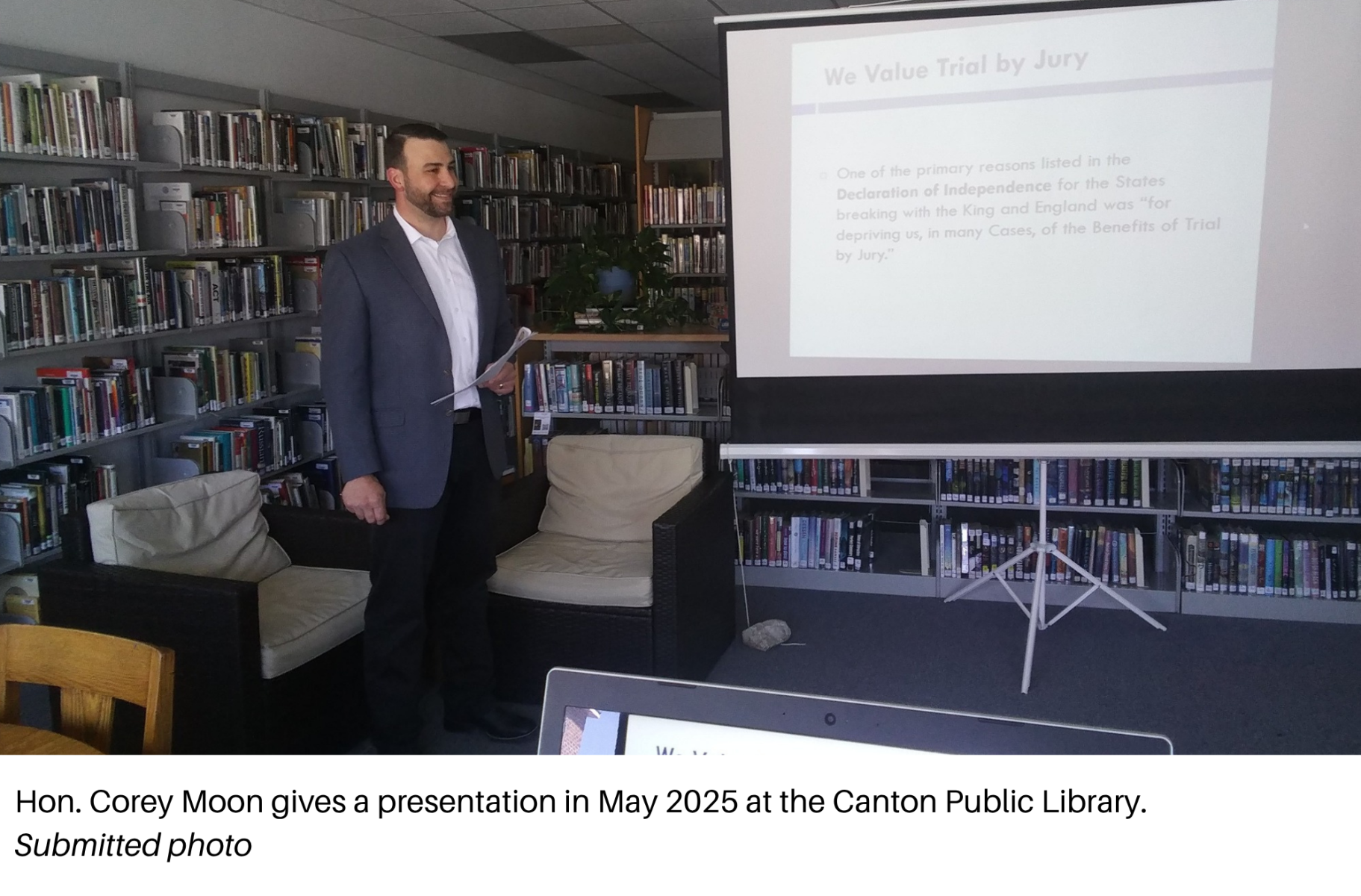
The Missouri Bar’s Special Committee on Rural Practice is researching the state of rural practice in Missouri, including examining barriers that may deter lawyers from practicing in rural areas, compounding potential access to legal services issues in those communities.
The Missouri Bar has data regarding how many lawyers practice in each county. What this data doesn’t show, however, is the geographic scope of these lawyers’ practices, and whether they are still in active practice, are judges, or work in public service.
The special committee will present its findings to The Missouri Bar Board of Governors, which will decide if the bar should take action and what those actions could be to help further improve the law, the profession, and the administration of justice in rural areas.
It’s a concern Hon. Corey Moon, associate circuit judge for Lewis County and special committee co-chair, has been passionate about for years.
 “It’s an issue that I’ve had on my radar since I was a law student 15 years ago, and I knew that the problem was not going to get any better,” Moon said.
Moon grew up in Canton and attended the University of Missouri School of Law. As a law student, he started a rural law association to help raise awareness of the issue. After graduation, he worked at a law firm in Kirksville. He then became Lewis County assistant prosecuting attorney, Knox County prosecuting attorney, and Macon County assistant prosecuting attorney, all while working as an associate attorney in private practice. He was then appointed Lewis County associate circuit judge in May 2021.
Moon, who serves on The Missouri Bar Board of Governors, pitched the idea of doing deeper research into rural practice in Missouri. Seeing Moon’s passion for the issue and having heard about similar concerns from other rural lawyers, Shelly Dreyer, 2024-2025 Missouri Bar president, was excited to start the special committee in 2025 and appointed Moon as chair. She is serving as co-chair.
“We care about the issues facing Missouri lawyers,” Dreyer said. “And the bar is here to support lawyers and to improve their practices, and also to improve the law and access to justice.”
Dreyer routinely travels to rural areas as part of her practice and visited rural communities as bar president. She said she often received “passionate responses” from Missouri lawyers and judges regarding challenges they faced while practicing in rural communities.
Practicing in rural areas
Dreyer grew up in a rural area north of Springfield. She didn’t know any lawyers or even many college-educated professionals other than her teachers. Her father, a union representative at the factory where he worked, encouraged her to become a lawyer.
Dreyer started her career at a defense firm in St. Louis, then worked in plaintiff’s injury in St. Charles County for about 10 years. Then, 18 years ago, she and her husband moved back to southwest Missouri to start a family.
The benefits of living in a smaller city far outweigh the limitations, Dreyer said.
“Switching to practice law in a more rural setting was a big change, but I absolutely love it because you get to know your local attorneys better,” Dreyer said. “You get to know your local judges better. It’s just a much more tight-knit legal community.”
Moon said he enjoys the camaraderie in the rural counties. 
“I think that makes it a lot easier for you to understand attorneys and the unique issues that they’re dealing with,” Moon said. “And that makes it easier for you to work with their challenges in practicing law.”
Maggie McConville, who practices at Chapman and Cowherd, P.C., grew up in the Chillicothe area and graduated from the University of Missouri-Kansas City School of Law in 2022. She said she moved back to Chillicothe because she saw that a firm was hiring, and she knew she would have mentorship, not only within her firm, but in the city as a whole.
“… [S]omething that’s really special about rural practice is that it does feel like its own little community and support,” McConville said.
Nicholas Jain, Dunklin County prosecuting attorney, is from Kennett. After graduating from the University of Missouri School of Law, he practiced at the Greene County Prosecutor’s Office before running for prosecutor in his home county.
One of the biggest differences between working in a metropolitan and rural area is the access to resources, particularly for individuals who need mental health services, drug rehab services, or domestic violence shelters, Jain said.
While those limitations can make some aspects of the work difficult, the legal system can still help people, Jain said.
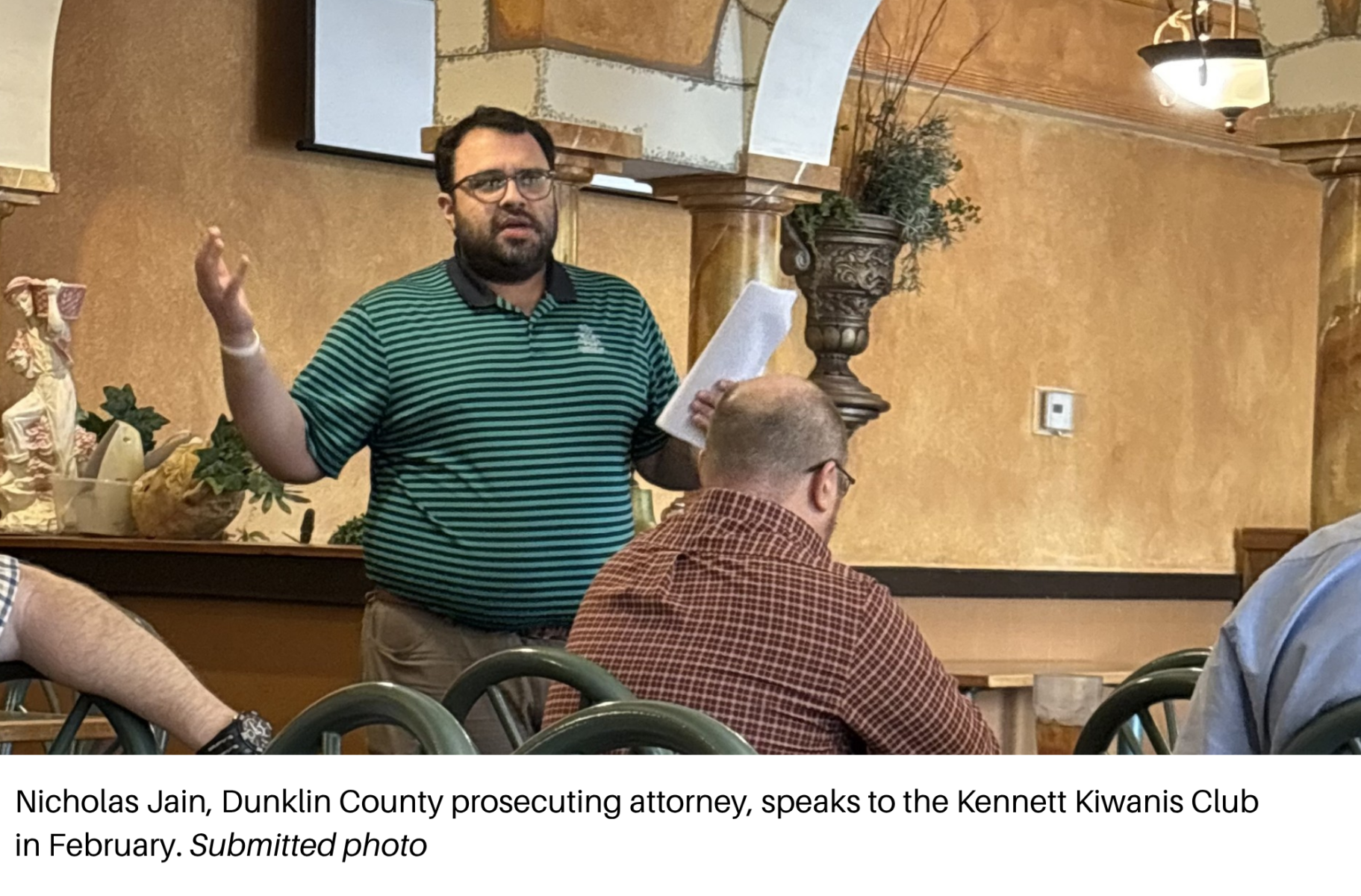 Overall, he enjoys working in a rural area as he often knows the victims and defendants in cases, as well as most of the jury panel. Jain said he likes how fulfilling his work as a rural lawyer is, and he appreciates the collegial relationships he has developed with other lawyers.
“Whenever you’re in your hometown, you kind of get to see the effects of what you do,” Jain said. “If someone is a victim of a robbery or stealing and you’re able to get some of those items back for them or get restitution, you just see the impact in a different, more immediate way.”
Another unique aspect of rural practice is often the plethora of areas of law an office covers, McConville said. While a firm may have to refer individuals to other offices in specialized situations, they often cover a lot of practice areas. In her first year of practice, she worked on family law cases, civil suits, and estate planning. She even worked on an appeal within her first six months.
Not only does her firm cover a variety of practice areas, it also covers a large geographic area — between 13-15 counties.
“We do actually have a robust amount of attorneys in and around our area, but it’s still not enough,” McConville said.
This can especially be an issue when several firms are conflicted out of a case, she said. Clients may have to be referred to lawyers in another city.
Navigating vacancies across the state
Moon said several prosecutor’s and public defender’s offices in his area have had at least one vacancy throughout the last several years.
Jain said the local public defender’s office isn’t fully staffed and relies on contract counsel. Indigent people may be assigned lawyers with an office an hour away, sometimes even in Arkansas, making it difficult for them to meet with their lawyers, he added.
In Linn County, there are no lawyers except for the judges and the prosecuting attorney, McConville said, so residents often must travel to Chillicothe or Macon for legal services.
In the more rural areas, these vacancies make a big impact. Lawyers may work in four or five counties and become stretched thin, Moon said. 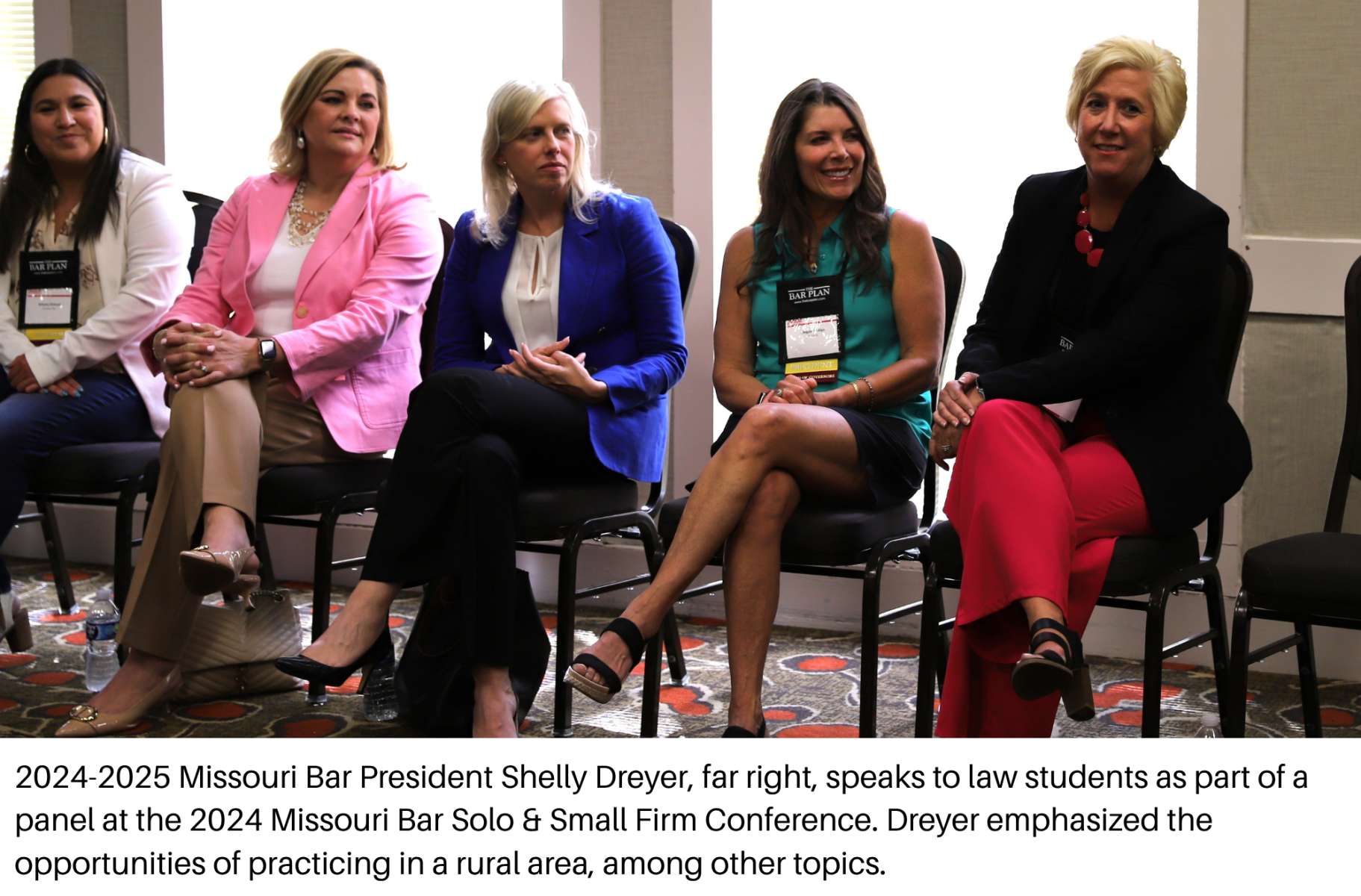
When clients must seek legal services from over an hour away, the cost of gas can be a hardship, Dreyer said. However, lawyers from cities who are willing to travel may charge more to cover travel time and expenses, which can create a financial hardship for clients, McConville said.
Some individuals represent themselves in her area, McConville said, because they can’t afford legal services or can’t find a lawyer. Lawyers in the area may not be able to take an individual’s case due to conflicts or because of the specialized nature of the case. Pro se documents can cover the basic information needed, but it can leave gray areas that could create legal issues. Having a lawyer draft documents containing additional language can address these issues, McConville said.
Moon said several litigants have told him they can’t find lawyers in his county to represent them for traffic tickets. Sometimes the closest lawyer is in St. Louis.
Finding a guardian ad litem is also a challenge, Moon said, as there are no lawyer residents of Lewis County who are certified as GALs. Instead, the court must find lawyers from Kirksville or Hannibal who are certified.
McConville said there are only three GALs in Chillicothe, including herself. One is running for judge, the other stopped taking juvenile cases, and McConville has reached her case limit. In some situations, she said, all the local GALs are conflicted out of a case, meaning a GAL from a different area must be appointed.
Most lawyers who work in rural practice care about access to legal services, McConville said, but their capacity to help may be limited as they are overworked and stretched thin.
If more young lawyers don’t start practicing in the area, these rural practice issues will only get worse, McConville said. At age 33, she said she is one of the youngest lawyers in the area.
 “I think that if we don’t figure out some solution or encourage young people to come back, we’re very much looking at a situation where people don’t have legal access,” McConville said.
Breaking down misconceptions
McConville believes there are several reasons why lawyers may be uninterested in practicing in rural areas. One is the misconception that rural lawyers don’t make very much money. Since there are not a lot of lawyers to choose from in rural areas, she said, there is no shortage of work. In addition, as the rural lawyer obtains more experience, they can increase fees, attract more clients and work, and have a lower cost of living in a rural area than in a city.
McConville also hears that there is nothing to do in small towns. In Chillicothe, at least, that’s not the case, she said. There is a vitalized downtown with restaurants, small businesses, festivals, and events. The surrounding towns also have breweries, shops, rivers, and lakes.
Other often-cited concerns include finding housing or mentorship, McConville said. If there is not a firm hiring in a rural area, she said, there are often older lawyers preparing for retirement who may be willing to train a young lawyer, and there may be opportunities to buy a practice.
“I think some of those misconceptions aren’t quite as daunting as people think,” McConville said. “I think a big thing is just wanting to actually live in the community.”
Looking ahead
To better identify if rural communities are having issues accessing legal services, The Missouri Bar Special Committee on Rural Practice created three surveys: one for lawyers, one for judges, and one for the public. These surveys focus on the employment and housing choices of lawyers in non-metropolitan areas and the ability of Missouri residents to access legal services.
The surveys are open to all Missourians, but the committee especially wants to hear from those in rural areas. The surveys will close toward the end of the year, and the special committee will evaluate the results throughout the first half of 2027.
Lawyers are encouraged to take the survey at MoBar.org/MORuralLawyers. Judges can take the judicial survey at MoBar.org/MORuralJudges.
Lawyers can also share the public survey with friends, family, neighbors, and groups they participate in. The public survey is available at MoBar.org/RuralLegalSurvey.
In addition to the surveys, the special committee will host outreach opportunities throughout the state to have in-depth conversations with lawyers and the public.
Beyond the special committee’s work, lawyers can speak to local schools, as Dreyer, Moon, McConville, and Jain have done. For example, McConville said she speaks at the Chillicothe High School for Constitution Day, not only on the Constitution but about practicing law.
“Kids often want to do what they see, and if they’re not seeing attorneys in their local areas, it may not occur to them,” Dreyer added. “Talk to kids in your areas and encourage them to consider a career in law.”
Encouraging students from rural areas to go into law is a great approach, Jain said, as lawyers from the area are more likely to move back and stay in their home region long term. Most of the lawyers and judges practicing in his area are from there, he added.
Lawyers don’t have to limit their speaking to primary schools. McConville routinely speaks on a University of Missouri-Kansas City rural lawyer panel and has seen attendance grow over the last several years. But beyond talking about rural practice, she has helped connect students with opportunities to job shadow lawyers and judges in rural areas.
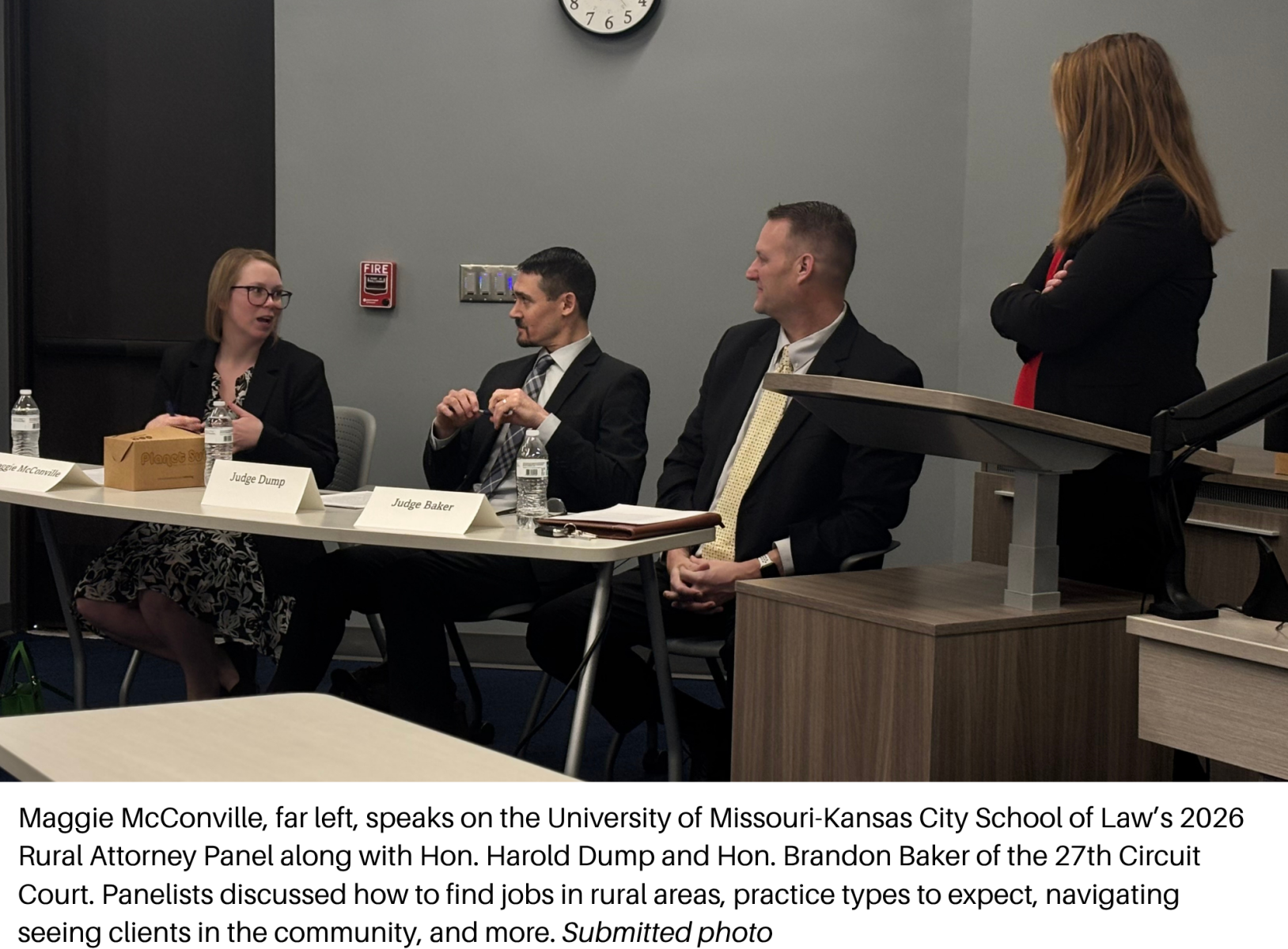 “It’s one thing to talk on a panel,” McConville said. “It’s another thing to actually come live in the community and see, ‘Oh, this is what you were talking about.’”
The issue of access to legal services is one that affects not only rural lawyers, but also lawyers in metropolitan areas. Moon said that part of a lawyer’s calling is to make sure the public is served.
“[I]f there are areas in your state that you’re licensed in experiencing a shortage or hardship, and you know that there are people there who are struggling to have access to justice because they can’t find a lawyer, that should be important to you,” Moon said. “And I think you should want to try to find a solution so that you can increase those services and kind of bridge that gap.”
For more information about the Special Committee on Rural Practice, contact The Missouri Bar at ruralpractice@mobar.org.