


Trivia: Test your understanding of the Rules of Professional Conduct
Vol. 81, No. 1 / January-February 2025
Compiled by Laura E. Elsbury, chief disciplinary counsel

Ready to put your legal knowledge to the test? These trivia questions will challenge your understanding of the Supreme Court of Missouri Rule 4 — Rules of Professional Conduct (RPC). Correct answers to the questions are at the bottom of the page. Note: More than one answer may be correct.
Answers

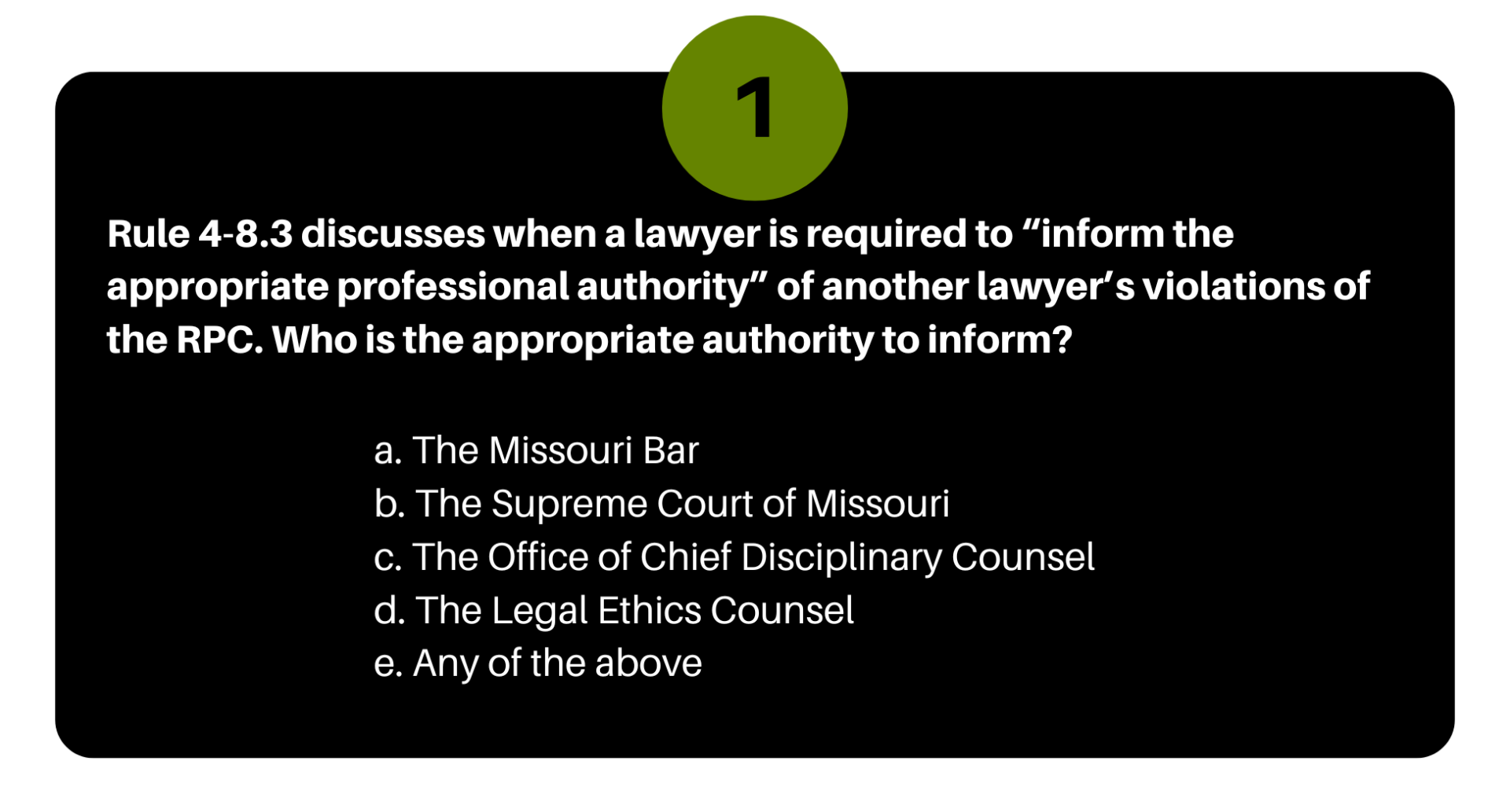
C. Supreme Court Rule 5.08 authorizes the chief disciplinary counsel to investigate professional misconduct.

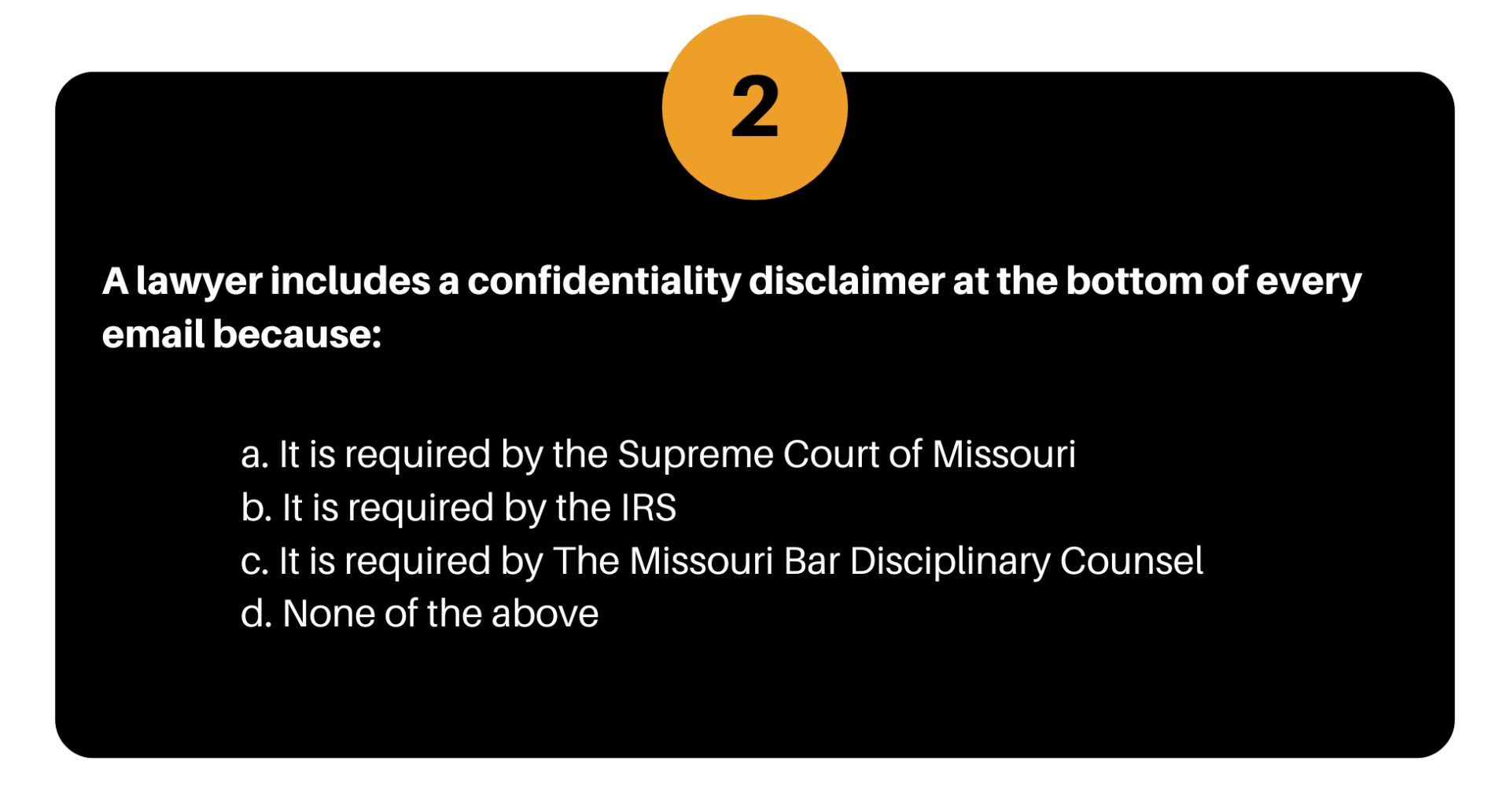
D. The RPC do not have an email disclosure requirement for Missouri lawyers, although lawyers are advised to take reasonable precautions to prevent the unintended interception of confidential information. See Informal Opinion 2012-01 at mo-legal-ethics.org for more information.

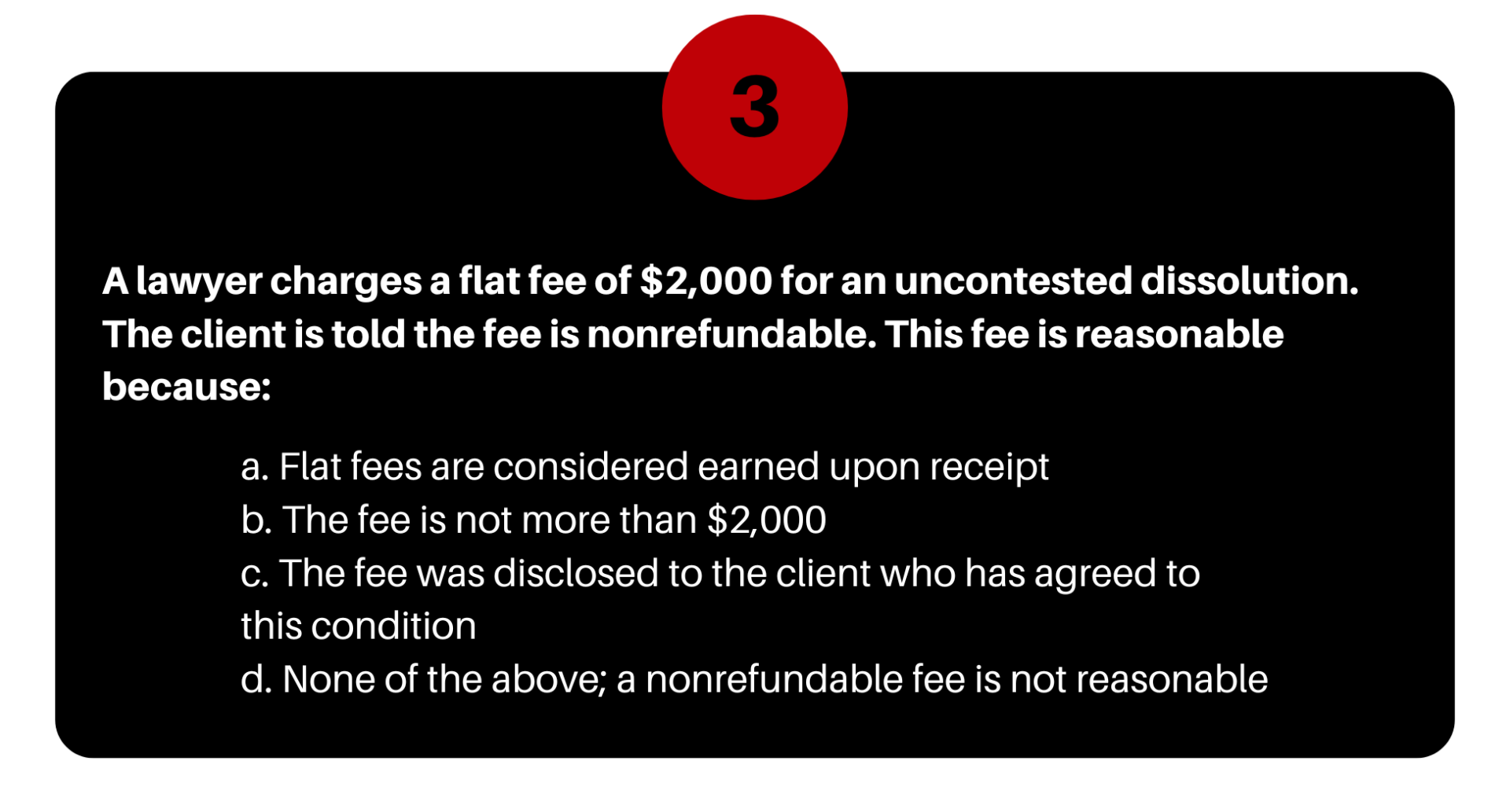
D. Nonrefundable fees are generally not considered “reasonable” because the client is entitled to a refund of the unearned portion if the attorney-client relationship terminates prematurely; that is, prior to the conclusion of the representation. For a more robust discussion, see Amended Formal Opinion 128 at mo-legal-ethics.org.

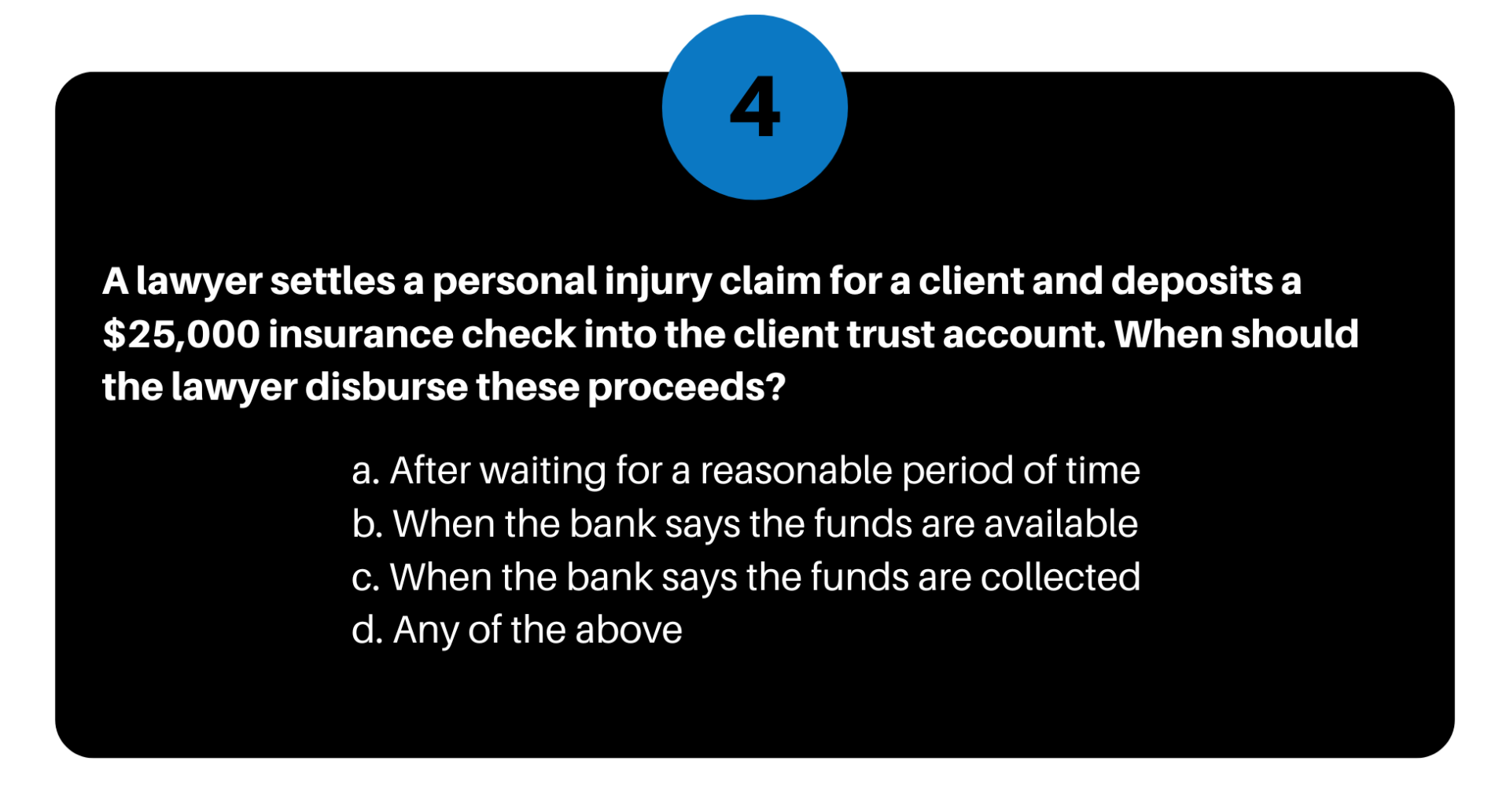
A. Lawyers may not disburse deposited funds from a client trust account “until a reasonable time has passed for the funds to be actually collected by the financial institution[.]” Rule 4-1.15(a)(6)(B). “It is not sufficient to wait only until the deposit is ‘cleared’ or ‘available’ according to financial institution records … Waiting 10 days after the date the bank records the deposit is presumed to be a reasonable period [though a] shorter period may be reasonable, in some circumstances.” Comment [5].

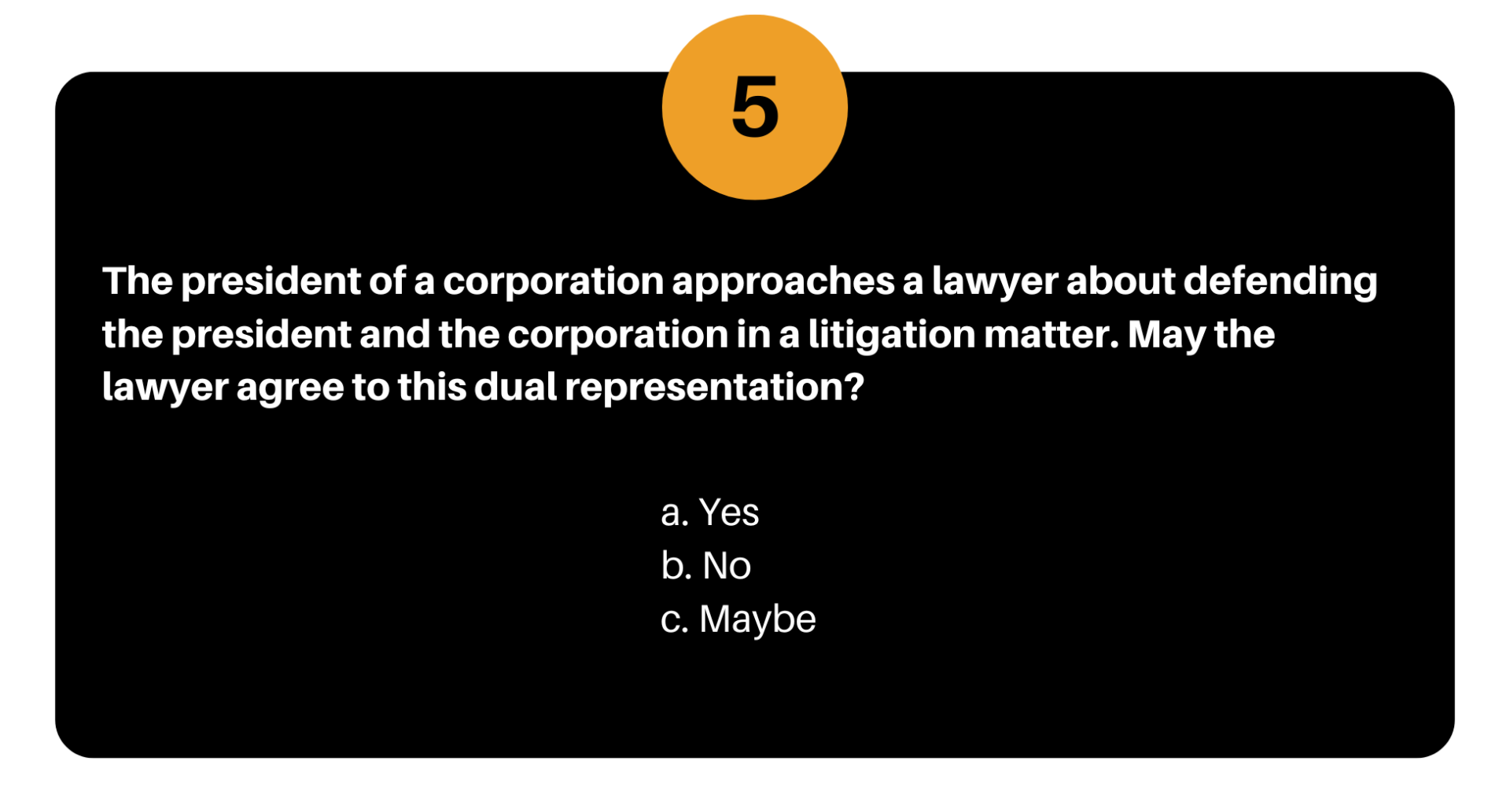
C. “ A lawyer representing an organization may also represent any of its directors, officers, employees, members, shareholders, or other constituents, subject the provisions of Rule 4-1.7. If the organization’s consent to the dual representation is required by Rule 4-1.7, the consent shall be given by an appropriate official of the organization other than the individual who is to be represented or by the shareholders.” Rule 4-1.13(e) – Organization as Client. Rule 4-1.7 addresses conflicts of interest involving current clients.

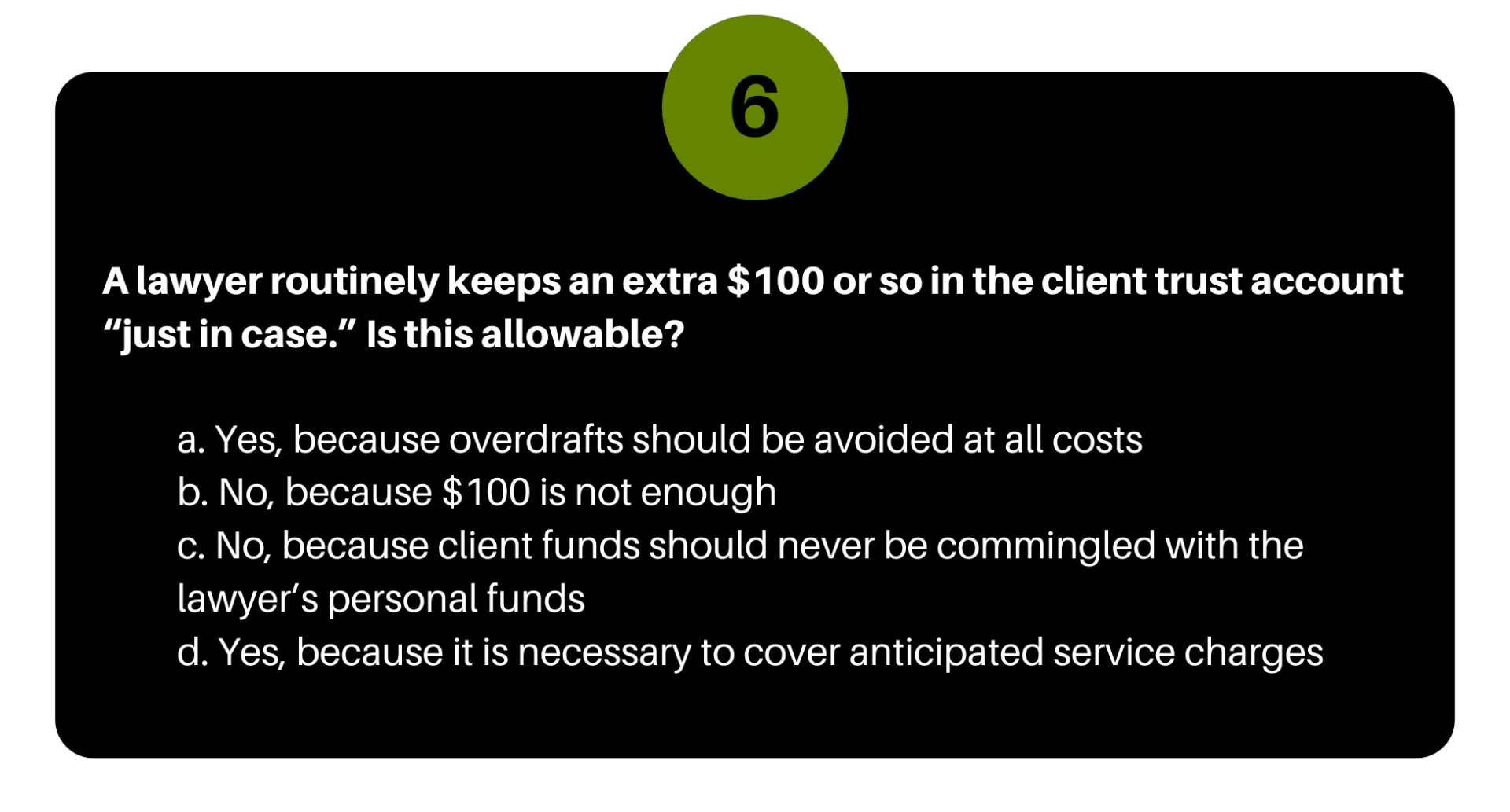
C. Rule 4-1.15 states: “(a) A lawyer shall hold property of clients or third persons … separate from the lawyer’s own property … (b) A lawyer may deposit the lawyer’s own fund in a client trust account for the sole purpose of paying … service charges … but only in an amount necessary for that purpose.”

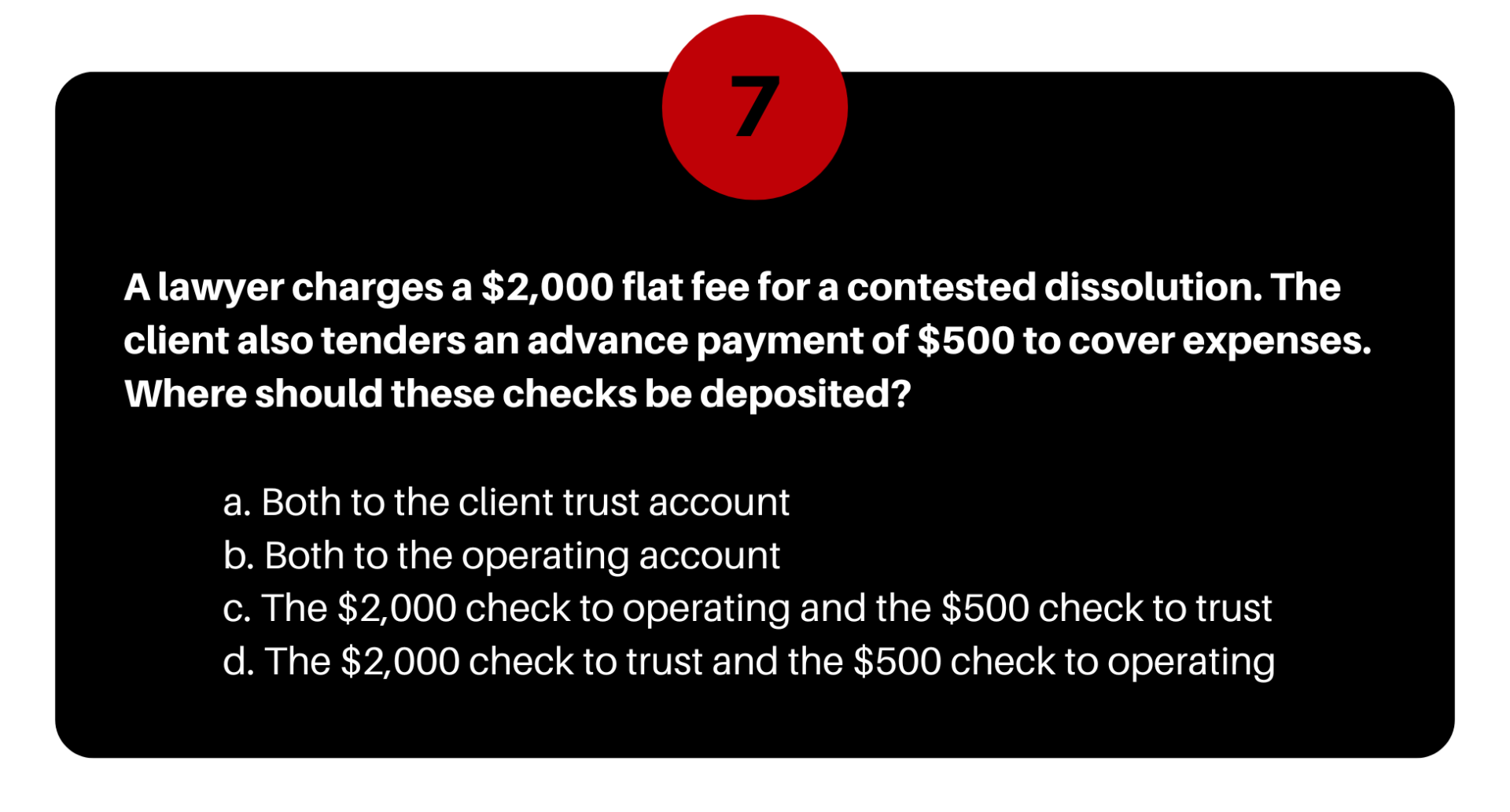
A and C. “A lawyer shall deposit into a client trust account legal fees and expenses that have been paid in advance, to be withdrawn by the lawyer only as fees are earned or expenses incurred, except that an advanced flat fee which does not exceed $2,000 is exempted from this requirement and may be deposited into another account.” Rule 4-1.15(c) – Trust Accounts and Property of Others. So, while the attorney fees in this example may fit this exemption, and may be deposited into the operating account, the expenses have not yet been incurred and those funds must be deposited into the client trust account. Note: The $2,000 exemption in this rule applies to the entire fee. For example, if a lawyer receives two separate $1,500 payments toward a $3,000 flat fee, both payments must be deposited into the client trust account because the total fee exceeds $2,000.

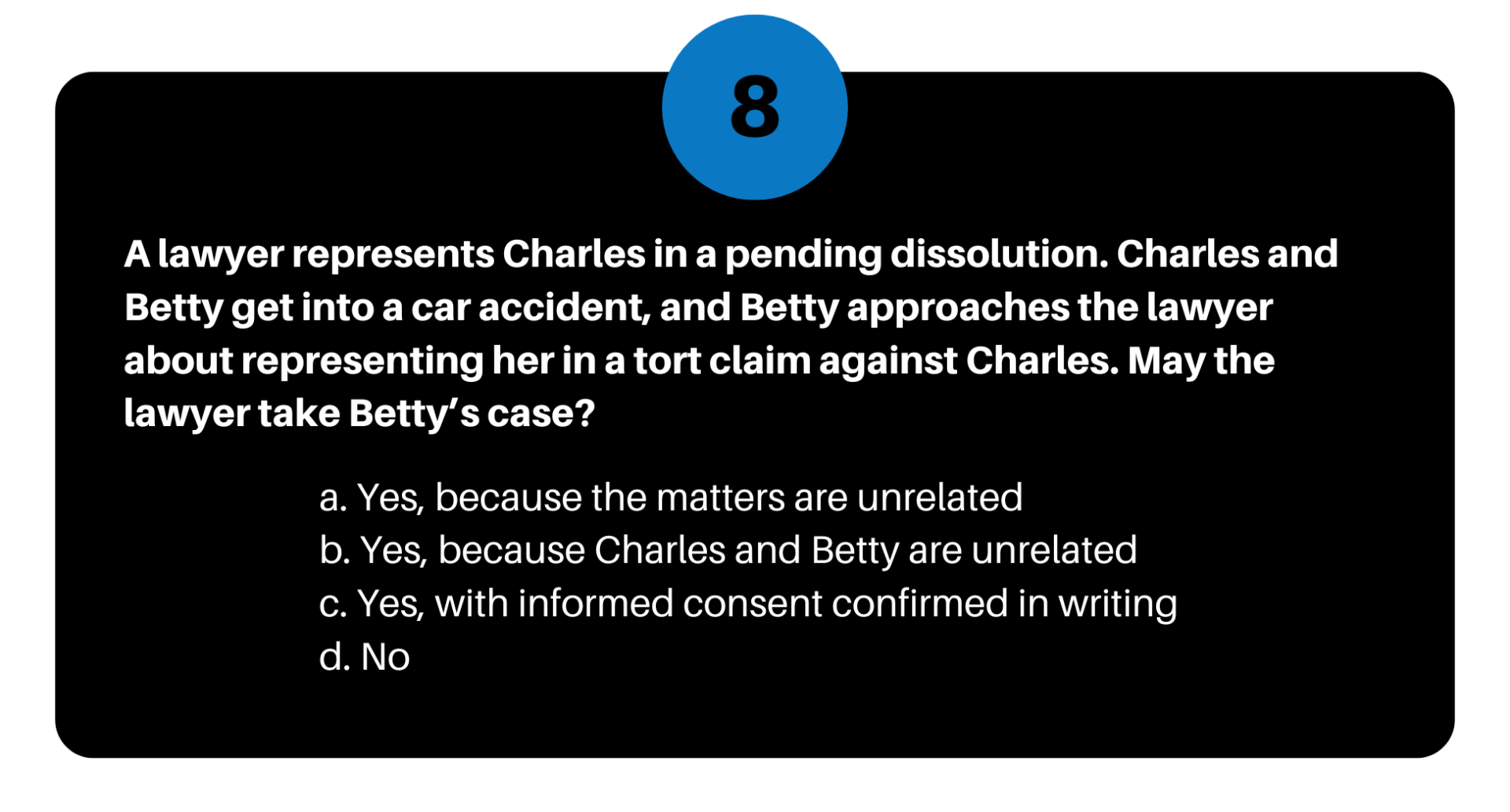
C. “Loyalty to a current client prohibits undertaking representation directly adverse to that client without the client’s informed consent. Thus, absent consent, a lawyer may not act as an advocate in one matter against a person the lawyer represents in some other matter, even when the matters are wholly unrelated.” Rule - 1.7 – Conflict of Interest: Current Clients, Comment [6]. See Rule 4-1.0 – and related comments – for the definitions of “informed consent” and “confirmed in writing.”