


Well-Being Week in Law: Emotional regulation
by Raven Ballard, PLPC, MOLAP clinician and well-being coordinator
We all experience positive and negative emotions. Emotions are a constant in life -- and many times happen without being prompted or in response to a certain event or situation. When discussing emotional regulation specifically, Psychology Today explains it as having the ability to exert control over one’s own emotional state. Examples of emotional regulation include utilizing positive coping skills to decrease negative emotions, such as anger or frustration; reframing a difficult situation to reduce the anxiety one is feeling about a given situation; and feeling tuned into one’s mental state and emotional needs. This regulation can play a big part in how lawyers are able to help their clients.
 Often when we’re struggling with anxiety, stress, depression, and other mental health disorders, emotional dysregulation rears its ugly head. It might feel as if our mental health is in control of us, rather than us in control of it. It can feel as if we’re at war with ourselves. We want to feel positively, but our brain and our body keep getting in the way and throwing negative emotions at us instead. This is what emotional dysregulation looks like.
Most people attempt to self-soothe or cope with the uncomfortable feelings. Coping comes in many different forms and fashions, but it’s important to remember that coping can be both healthy and unhealthy. Here are some examples of each:
Unhealthy coping mechanisms:
- Taking negative emotions out on others
- Isolating or excluding oneself from connection
- Using substances such as alcohol or drugs to numb the emotions
- Sleeping to avoid the feeling (not just sleeping to get rest)
- Binge eating (a sweet treat or snack is good, unless it’s being used consistently to cope from negative emotions)
Healthy coping mechanisms:
- Leaning into your support group (i.e. talking with a friend or coworker)
- Utilizing physical exercise such as going for a walk or watching a yoga video on YouTube
- Writing down your feelings
- Taking deep breaths and grounding yourself
We all experience icky emotions that we wish we didn’t have to, but running from the emotion or bottling it up just leads to further emotional dysregulation. A good rule of thumb is that “you must feel it to heal it and name it to tame it.”
Here are some general tips that can help assist in building emotional regulation:
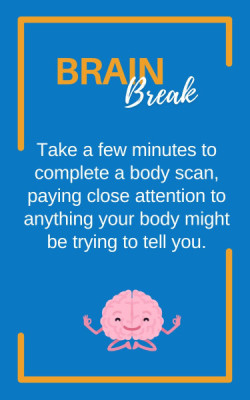
Complete a body scan: Take some deep breaths and ask yourself how you’re feeling in this moment. How does your body feel? Are there any sensations, emotional or physical, that feel uncomfortable right now? If so, what do you believe these sensations are trying to tell you?
If you’d like to discuss how you could improve your ability to emotionally regulate, the Missouri Lawyers’ Assistance Program is here to help! Please consult the Missouri Lawyers’ Assistance Program at 1-800-688-7859 for free, confidential counseling.
References:
Klynn, B. (2021). Emotional regulation: Skills, exercises, and strategies. Better Up. Retrieved from: https://www.betterup.com/blog/emotional-regulation-skills
Psychology Today. (nd.) Emotional regulation. Retrieved from: https://www.psychologytoday.com/us/basics/emotion-regulation#:~:text=Emotion%20regulation%20is%20the%20ability,to%20feel%20happy%20or%20calm