


Trivia: Test your understanding of the Rules of Professional Conduct (Round 2)
Vol. 81, No. 3 / May-June 2025
Compiled by Laura E. Elsbury, chief disciplinary counsel

Ready to put your legal knowledge to the test — again? These round two trivia questions will challenge your understanding of Supreme Court of Missouri Rule 4 — Rules of Professional Conduct. Correct answers are at the bottom of the page. Note: More than one answer may be correct. Find round one of the trivia quiz here.
Answers

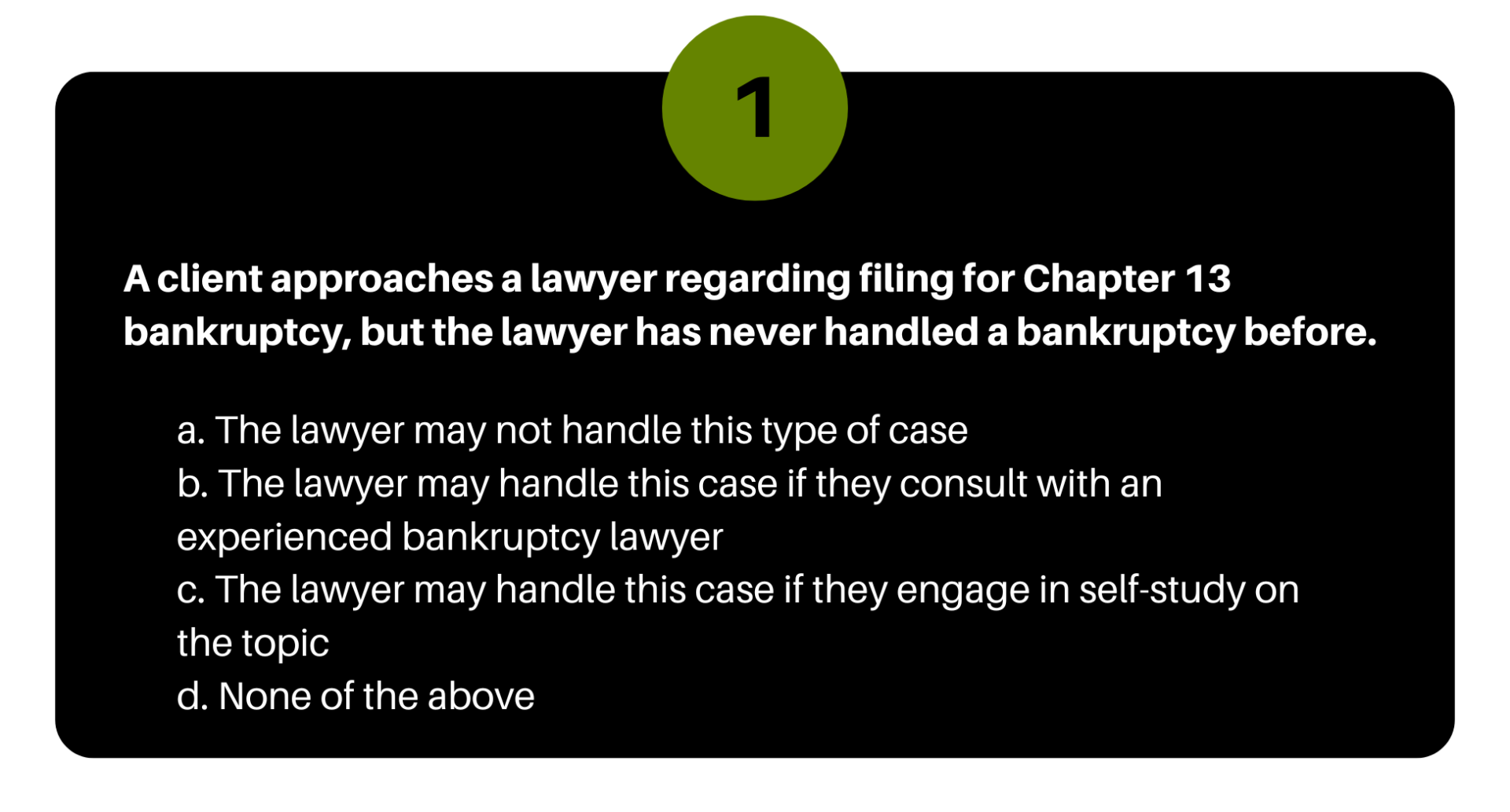
B. and C.
See Rule 4-1.1 (Competence). Comment [2] states: “A lawyer can provide adequate representation in a wholly novel field through necessary study. Competent representation can also be provided through the association of a lawyer of established competence in the field in question.”

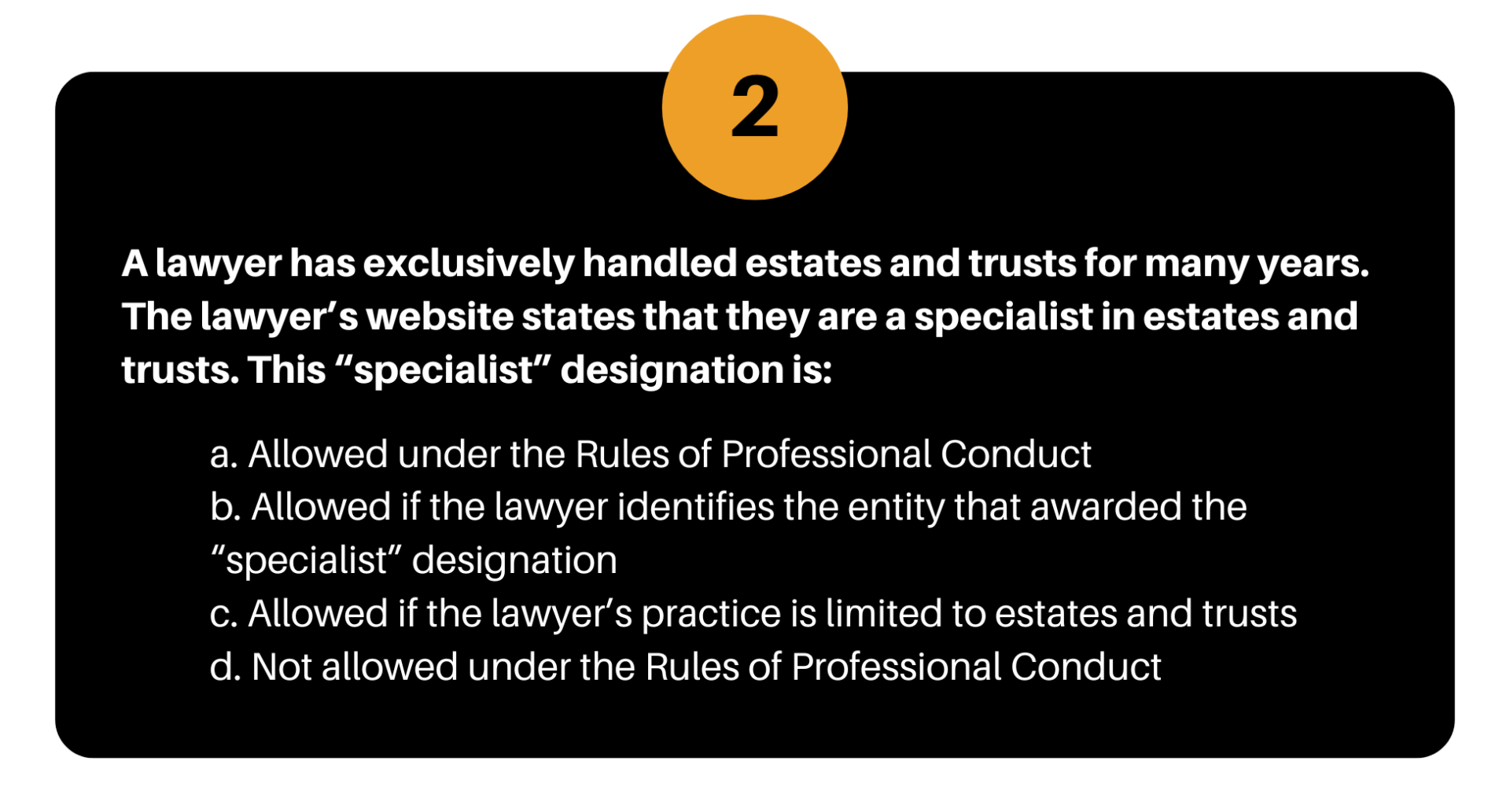
D.
See Rule 4-7.4 (Communication of Fields of Practice or Specialization), which states that “a lawyer shall not state or imply that the lawyer is a specialist unless the communication contains a disclaimer that neither the Supreme Court of Missouri nor The Missouri Bar reviews or approves certifying organizations or specialist designations.”

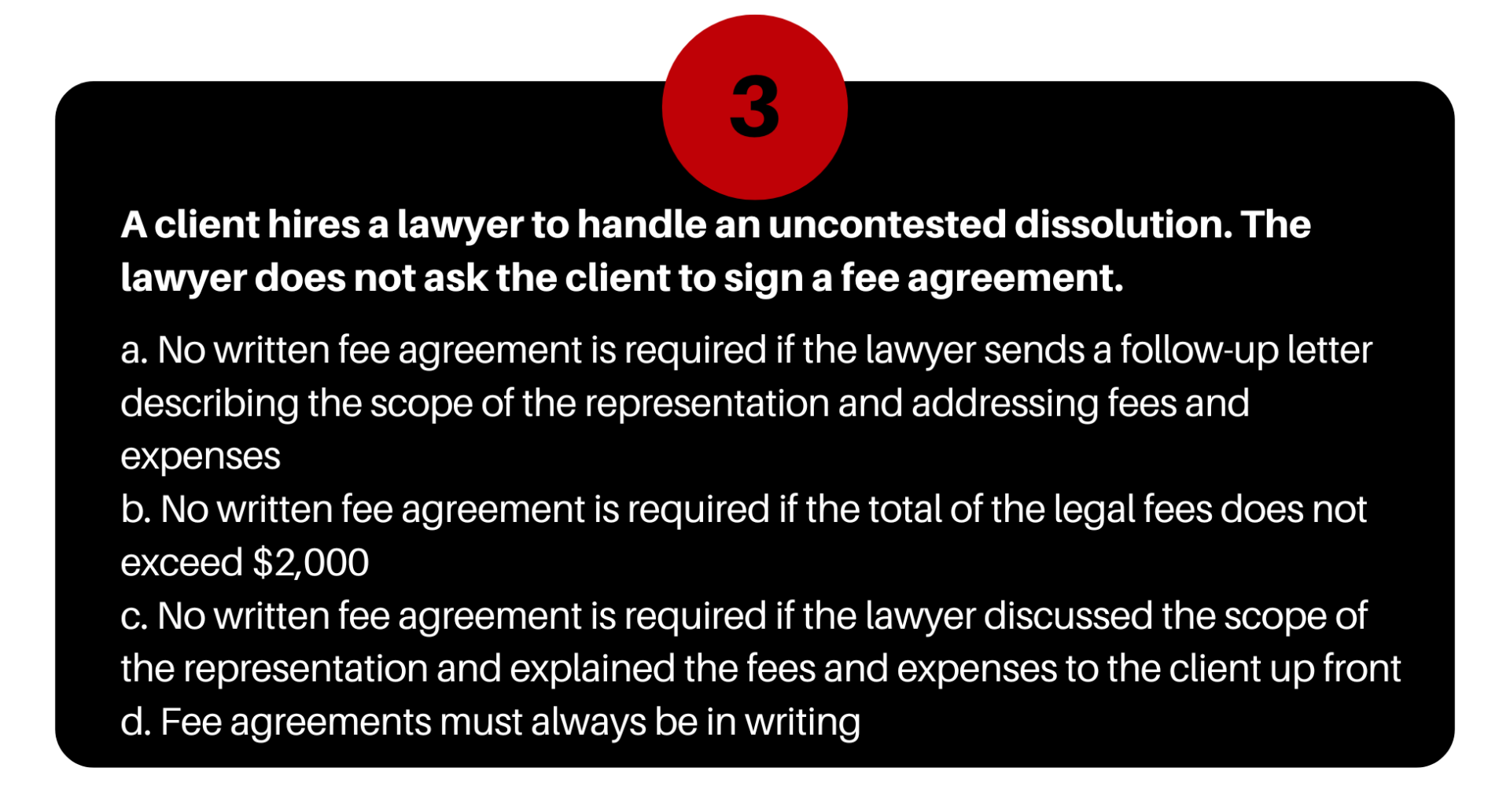
A. and C.
See Rule 4-1.5(b) (Fees): “The scope of the representation and the basis or rate of the fee and expenses for which the client will be responsible shall be communicated to the client, preferably in writing, before or within a reasonable time after commencing the representation[.]” (emphasis added).

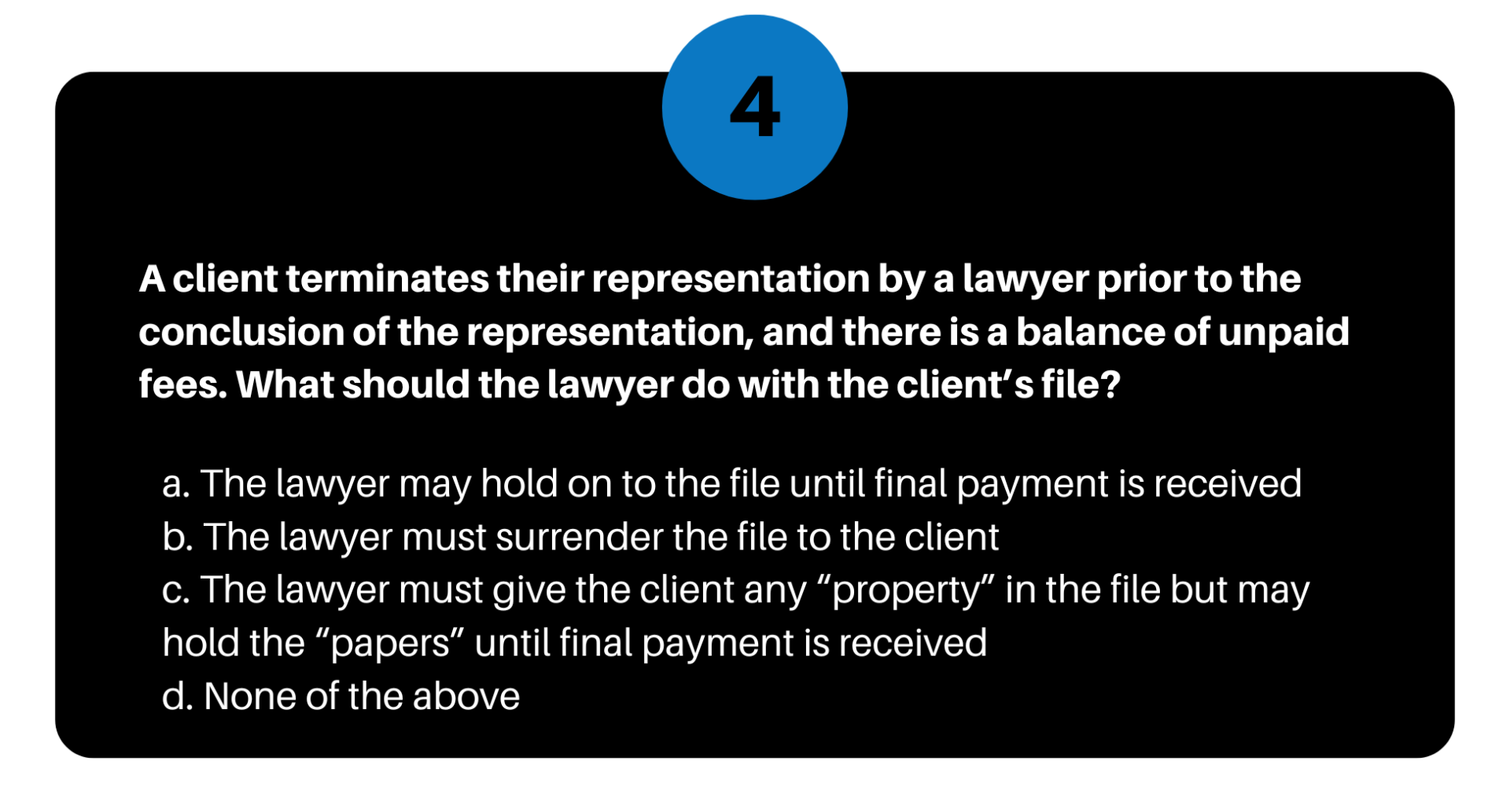
B.
See Rule 4-1.16(d) (Declining or Terminating Representation): Upon termination of representation, a lawyer shall take steps to the extent reasonably practicable to protect a client’s interests, such as giving reasonable notice to the client, allowing time for employment of other counsel, surrendering papers and property to which the client is entitled and refunding any advance payment of fee or expense that has not been earned or incurred. The lawyer may retain papers relating to the client to the extent permitted by other law.

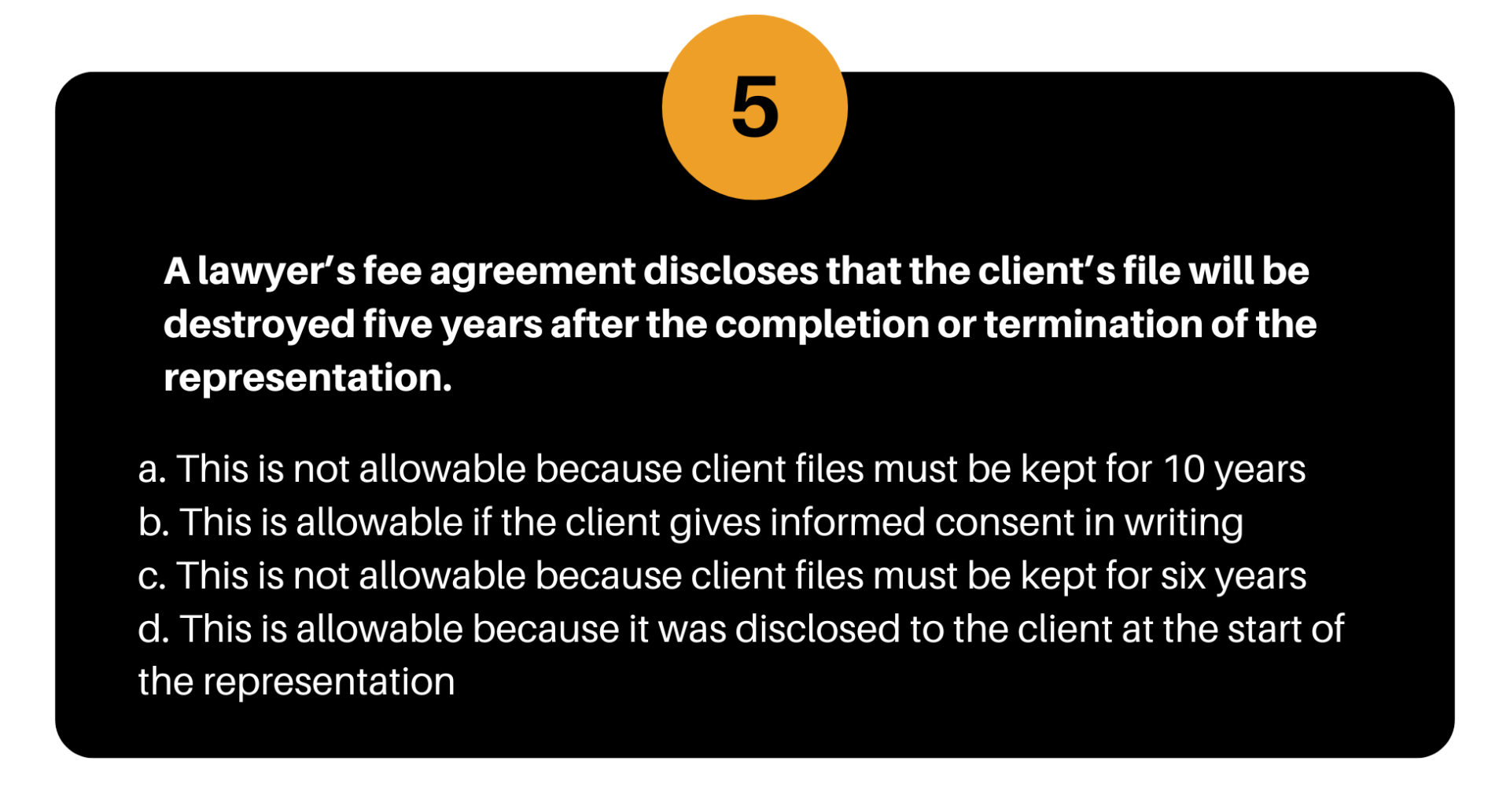
B. and C.
See Rule 4-1.22: “A lawyer shall securely store a client’s file for six years after completion or termination of the representation absent other agreement between the lawyer and client through informed consent confirmed in writing.”

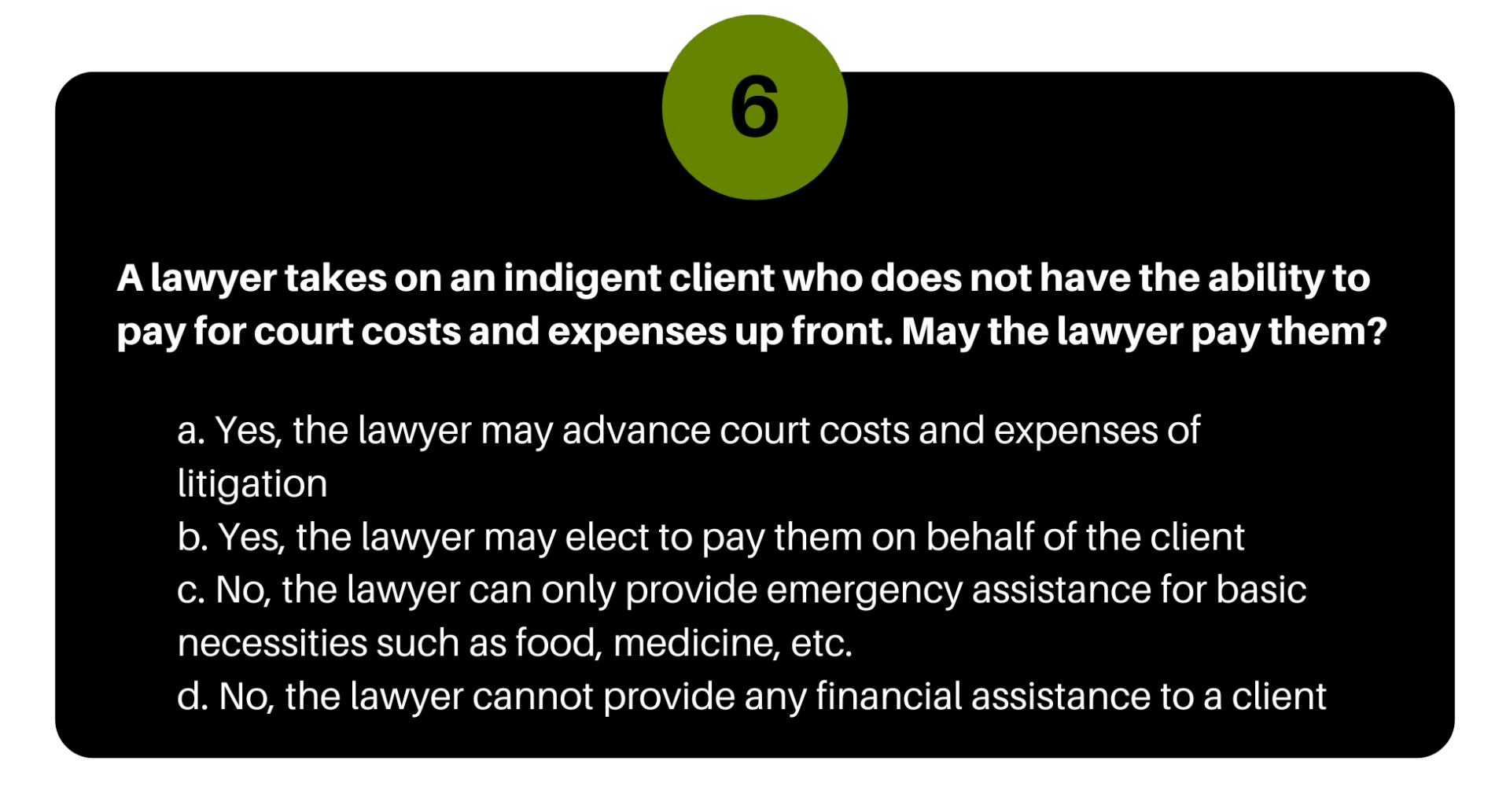
A. and B.
See Rule 4-1.8(e) (Conflict of Interest: Prohibited Transactions): A lawyer shall not provide financial assistance to a client in connection with pending or contemplated litigation, except that: (1) a lawyer may advance court costs and expenses of litigation, including medical evaluation of a client, the repayment of which may be contingent on the outcome of the matter; and (2) a lawyer representing an indigent client may pay court costs and expenses of litigation on behalf of the client.

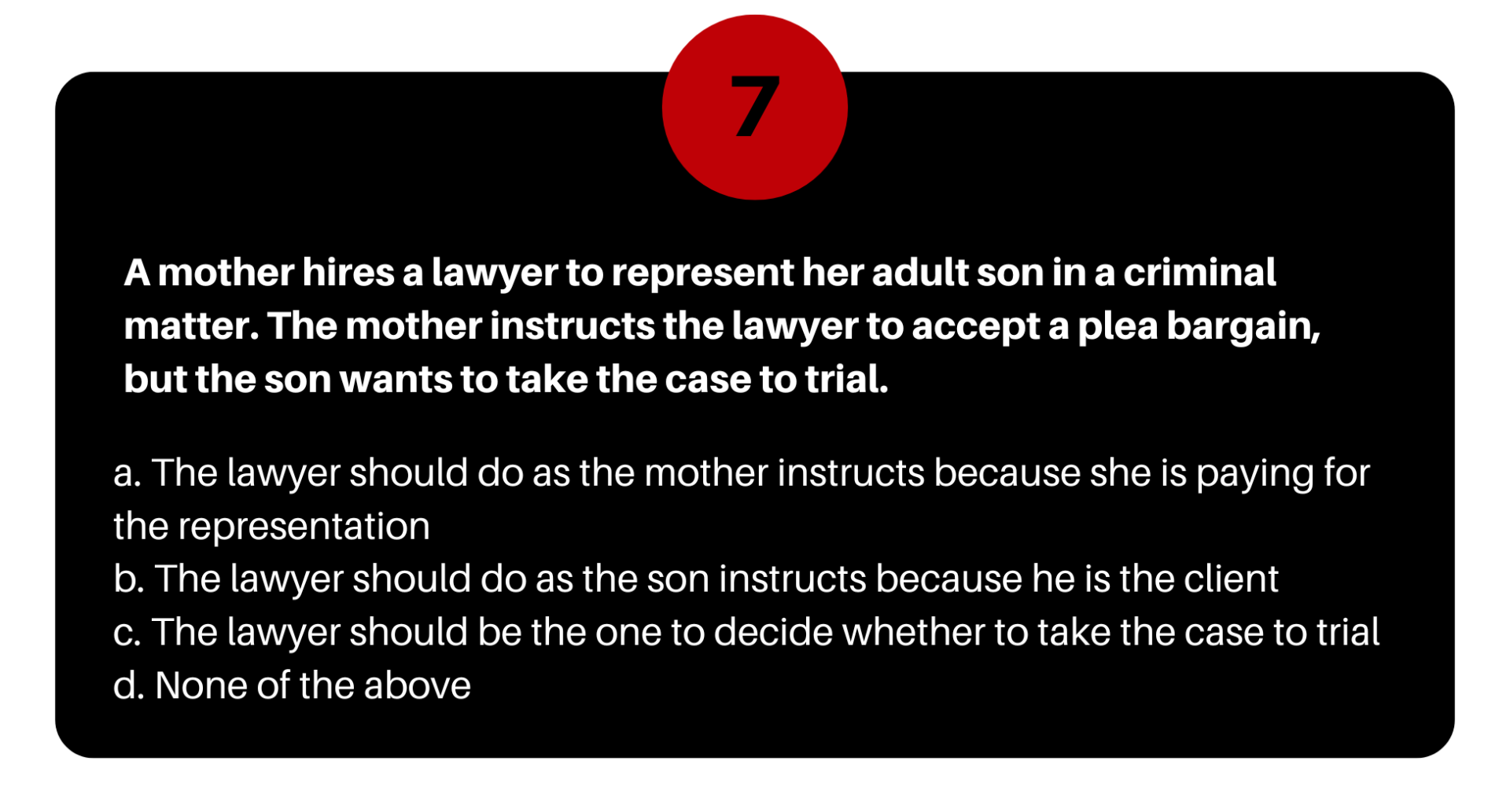
B.
See Rule 4-1.2(a) (Scope of Representation): “In a criminal case, the lawyer shall abide by the client’s decision, after consultation with the lawyer, as to a plea to be entered, whether to waive jury trial and whether the client will testify.” See also Rule 4-1.8(f) (Conflict of Interest: Prohibited Transactions): A lawyer shall not accept compensation for representing a client from one other than the client unless (1) the client gives informed consent; (2) there is no interference with the lawyer’s independence of professional judgment or with the client-lawyer relationship; and (3) information relating to representation of a client is protected as required by Rule 4-1.6.

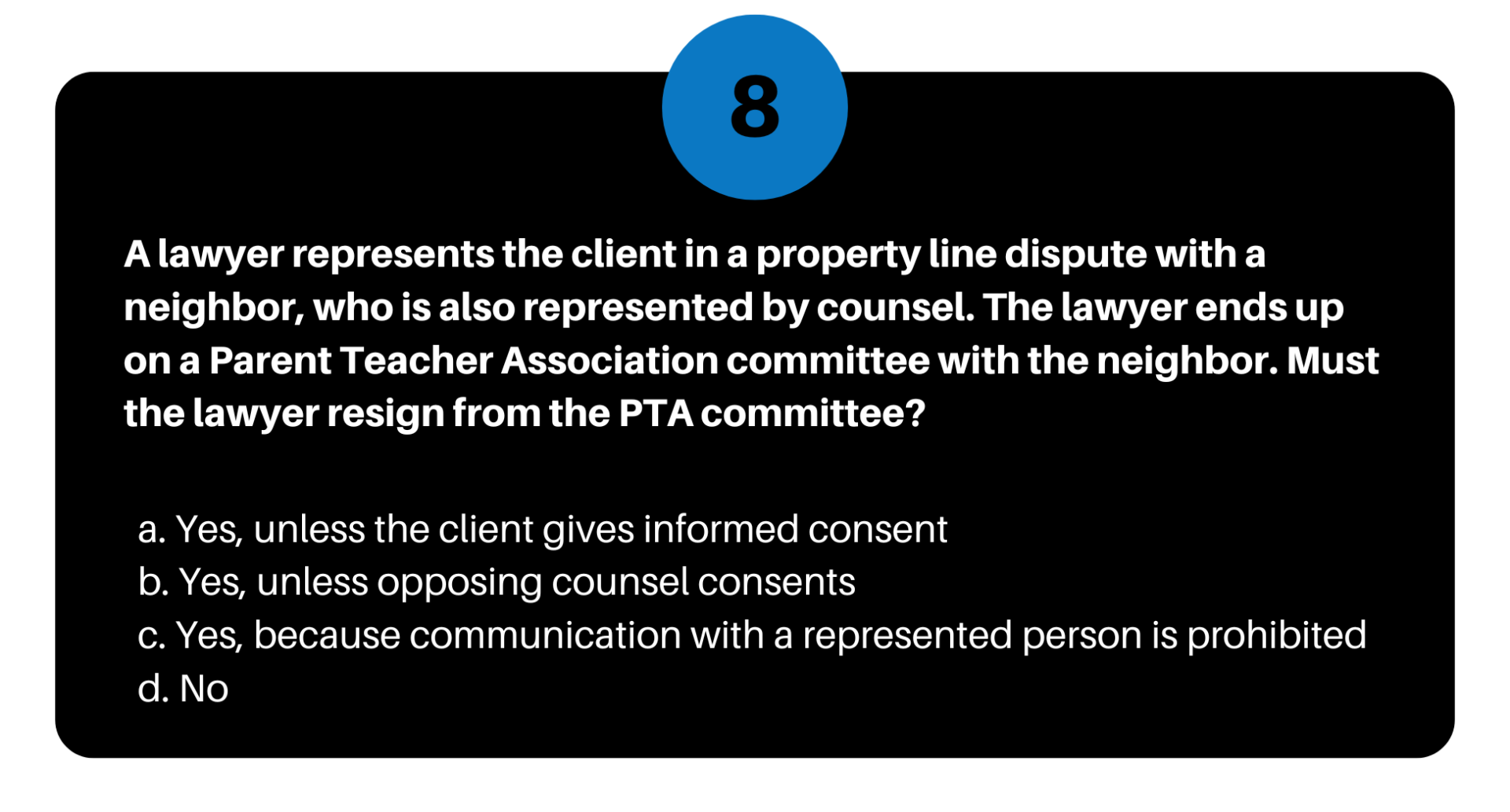
D.
See Rule 4-4.2 (Communication with a Person Represented by Counsel): In representing a client, a lawyer shall not communicate about the subject of the representation with a person the lawyer knows to be represented by another lawyer in the matter, unless the lawyer has the consent of the other lawyer or is authorized to do so by law or a court order. Comment [4] adds, “Rule 4-4.2 does not prohibit communication with a represented person … concerning matters outside the representation.”